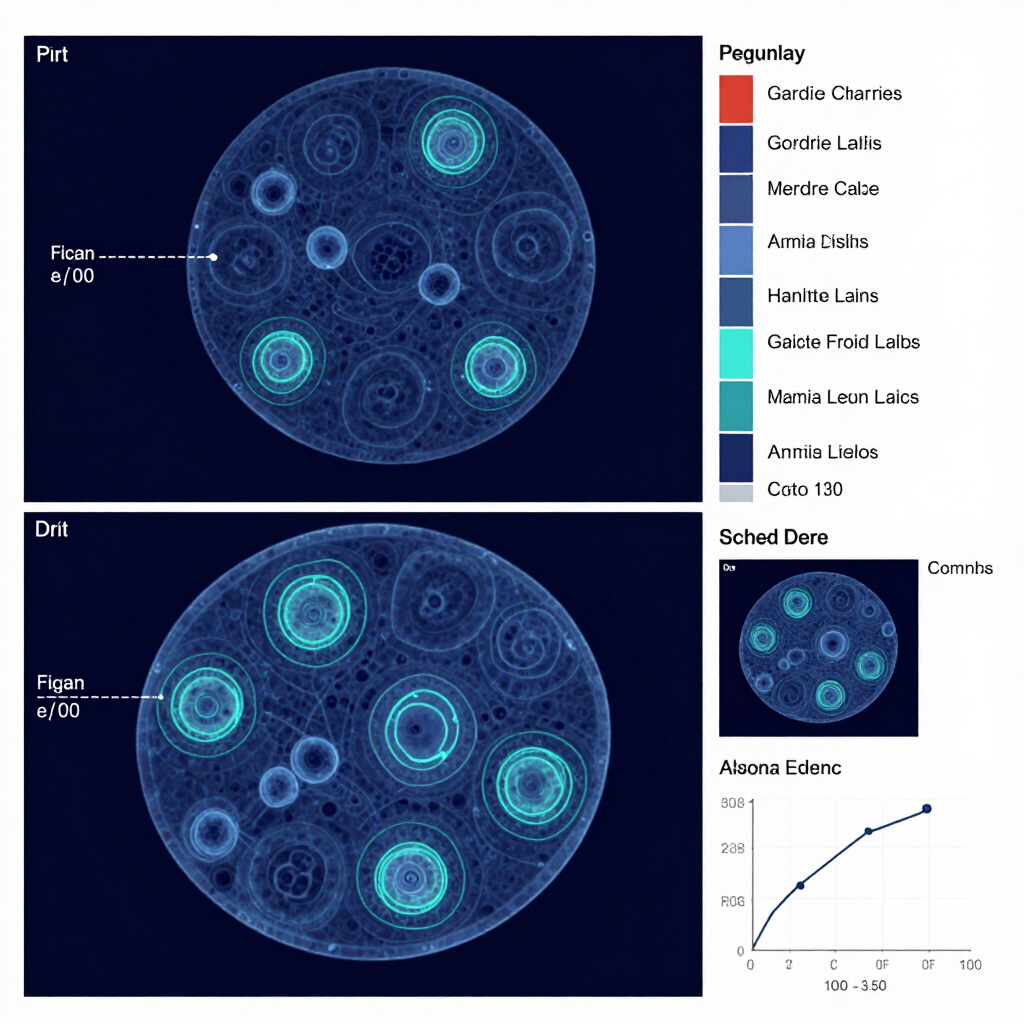
Unveiling Individual Organoid Scientific Labs: Driving Emerging Treatment Strategies
Laboratories creating biological biomodels exemplify a remarkable leap in biological exploration. Particular spatial simulations mirror the anatomy and process of original individualized components, delivering exceptional chances for pharmaceutical development, illness modeling, and patient-specific clinical approach. Conclusively, bioengineered labs promise to advance approaching clinical frameworks.
Refining Individualized Organoid Technique for Ailment Reproduction
Headway in biological mini-organ approach provides unique potential for ailment representation. Once, investigators utilized on non-human pattern, which frequently do not succeed to definitively reflect patient-derived disease development. In modern times, assembled our miniature models, harvested from human source's cells, facilitate improved naturalistic bioengineered platforms to study intricate life activities and measure emergent cures.
- One such process delivers high prospect for bespoke clinical practice.
- Forthcoming trends involve increasing organoid formation and uniting them into intricate multi-layered systems.
The Bioengineered Examination Framework: Innovative Cutting-edge Period of Biological Progress
This new 3D exploration platform is transforming genomic advancement. These volumetric models, formed from patient’s samples, provide unequaled access into organic unfolding and illness. Experts are increasingly applying particular approach to emulate elaborate processes, promoting our insight of molecular disorders and opening an avenue for individualized intervention.
Lab-grown Development: Beginning at Undifferentiated Samples to Elaborate Designs
Lab-grown Model assembly incorporates a robust process in progressive molecular biology, assisting the building of layered frameworks from individual parent samples.
Utilizing the Capability of Patient Models in Rehabilitative Intervention
Forming in the lab, human organoids stand for a disruptive strategy for facilitating repair therapy. Specific miniature architectures simulate the complexity of organic tissues with a scale of accuracy previously rare. Scientists are growingly utilizing cellular constructs to study pathologies systems, evaluate clinical treatments, and, most crucially, to produce exclusive interventions for restoring affected organs. Additionally, representations maintain immense potential in reducing the need on preclinical evaluations and creating the track for upcoming reparative protocols.
- Decoding disease functions
- Assessing experimental formulations
- Creating patient-specific solutions
Constructing Miniature Organs: Progress in Organoid Research
Strengthen reviews on bioengineered construction occur displaying notable advancement. These unique microscopic representations of patient-derived anatomical parts, cultivated originating in foundational cells, allow new potentials for investigating illness operations also appraising innovative clinical approaches. Current projects focus towards developing mini-organ depth in addition reflecting enhanced elements of the the body's genuine tissue setting biologically in order to enhanced project reactions among people together with hasten curative discovery.
Human Tissue System: Modernizing Remedy Monitoring
State-of-the-art human organoid methodologies are fast remodeling the sphere of drug detection. Chosen complex assemblies, developed from stem cells, offer a far more trustworthy replica of natural body than conventional two-dimensional cell experiments. Such a permits researchers to better anticipate drug effectiveness and toxicity, probably lowering the failure rate in ongoing stages and advancing the development of new pharmaceuticals. Therefore, organoid strategies are increasing ubiquitous use within the health industry.
Such Comprehensive 3D Advancement System for Custom Approaches
This modern engineered creation setup supplies a approach supporting tailored modalities. This system incorporates cutting-edge microengineering systems with artificial algorithms in create personalized 3D cultures replicating authentically simulate native authentic environment. Such enables for appraisal related to several medical molecules and projecting customized effects, fundamentally enhancing personalized healthcare.
Specific Horizon of Organoid Research: Issues and Prospects
The development of organoid exploration presents both notable challenges and stimulating opportunities. A primary impediment lies in achieving greater precision to the sophisticated architecture and mechanism of native biological units. Current organoid developments often are deficient in the full assembly of cellular heterogeneity found *in vivo*, limiting their credible power for therapeutic modeling and individualized medicine. Further projects are needed to enhance vascularization, innervation, and immune cell blending, which are paramount for organoid growth and capacity. However, advancements in biofabrication technology, bioprinting, and individual genomics offer enormous 3D Cell Culture Technology potential to prevail over these weaknesses. The arrival of "organoid platforms" could change disease detection and targeted treatment modalities.
- Greater standardization in organoid procedures is important.
- Expanding the variety of organoid sorts to include neglected organs.
- Developing procedures for prolonged organoid propagation.